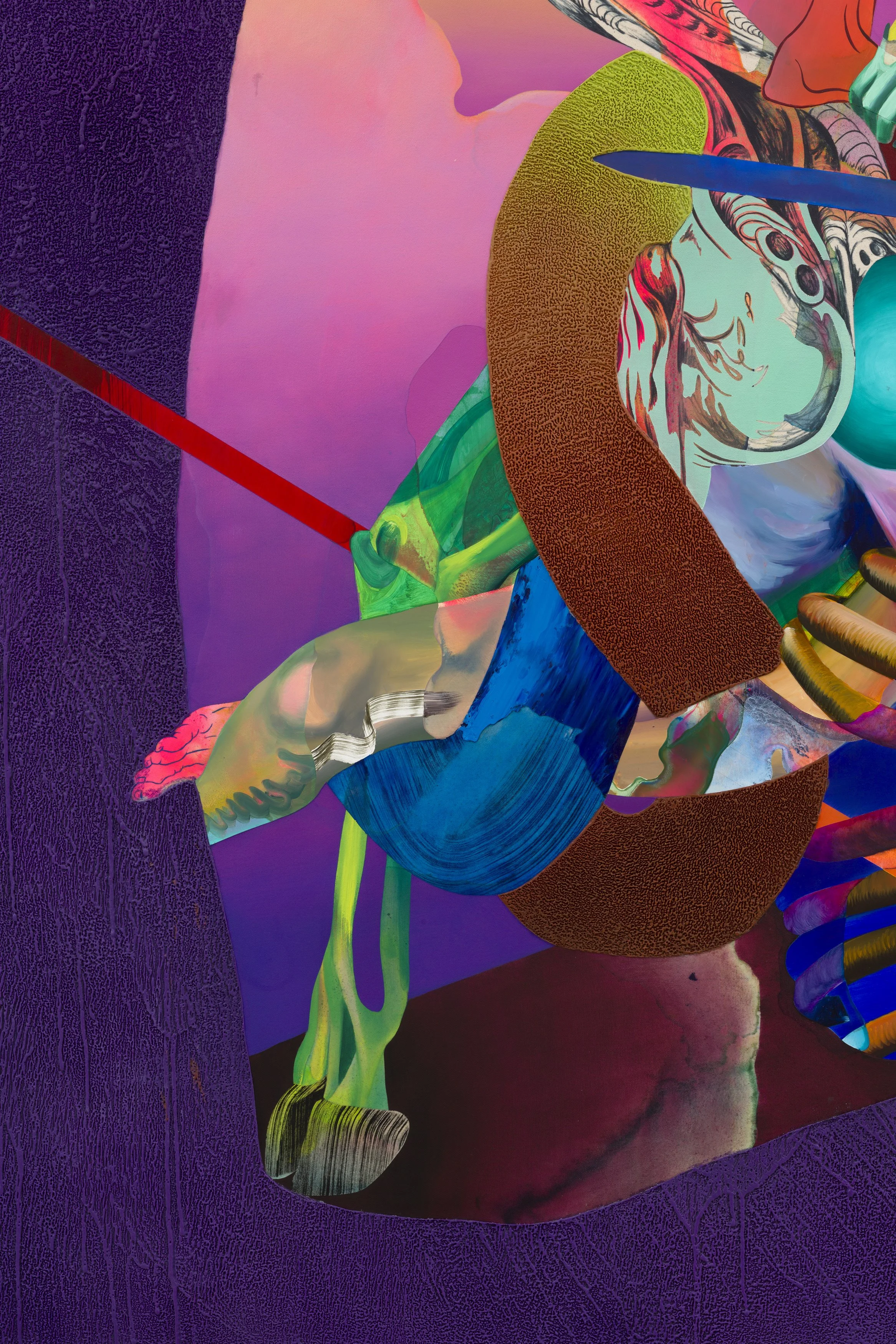
Ectopia
White Cube Paris
May 31 - July 27, 2024
lana Savdie’s Shadow Body
by Moran Sheleg
Even hidden in the most squalid Parisian halls, wrestling partakes of the nature of the great solar spectacles, Greek drama and bull-fights: in both, a light without shadow generates emotion without reserve.
– Roland Barthes, ‘The World of Wrestling’[1]
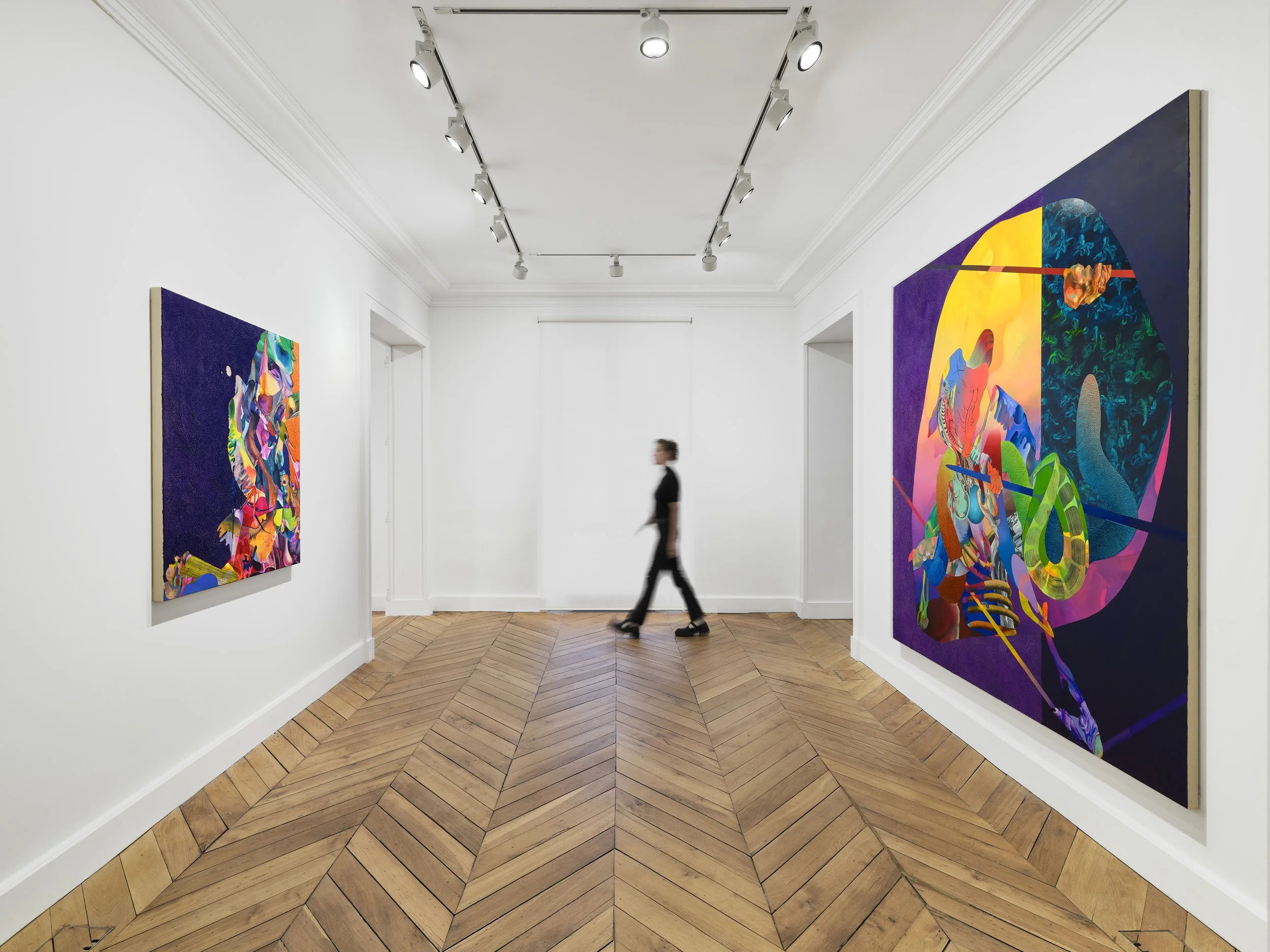
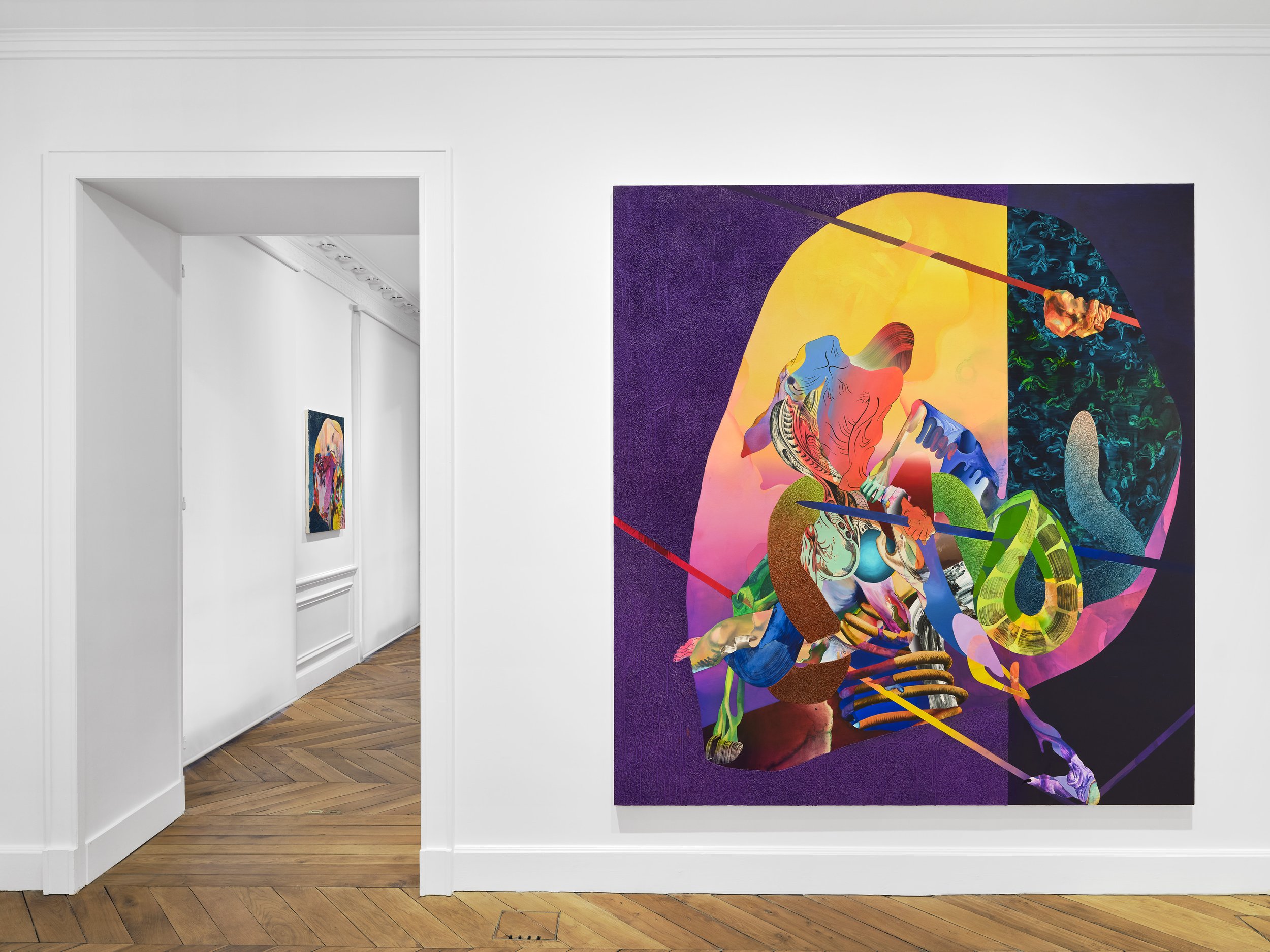
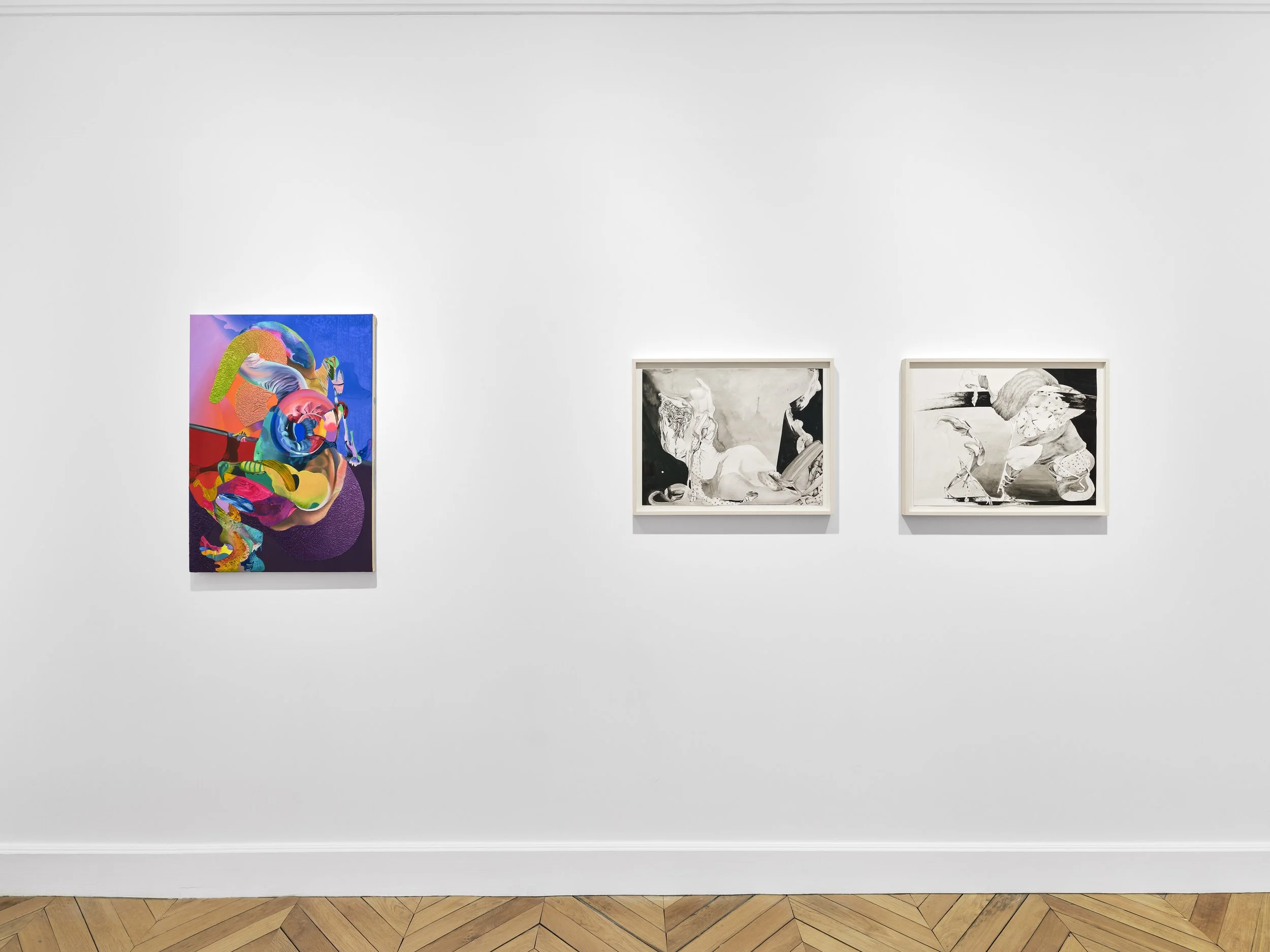
To stand before a work by Ilana Savdie is to be put in a particular position. A position of uncertainty, of discomfort, of proximity to something absurd and loud and impossible to remain neutral over. Although apparently delimited by the edges of the canvas or sheet of paper, the longer one looks at one of Savdie’s surfaces, the further the lines begin to blur between what is observed and what is felt. As colour undulates and is undone, so too is form. Here, a gnarled hand grasps onto a shaft of blue (a lifeline? a weapon?), there, an exposed torso contorts and falls to pieces. Everywhere, tension builds only to be undercut and flooded by looseness, in a melodrama in which texture invades flatness and flatness supersedes texture. Transposing themselves from surface to surface, the abject bodily fragments that populate these canvases become augmented through repetition. As they move beyond recognition, an excess of representation tips over into abstraction.
-
Oscillation between opposing states pulsates through Savdie’s work like a lifeblood, with sabotage of one by the other a constant threat. This is true not only of figuration and abstraction but also (lying as these themes do at the heart of both art-making and bodily experience) of pain/pleasure, control/chaos, part/whole, artifice/veracity, one/many. Extending to other realms beyond the human and the binary – such as the cephalopodic, the parasitic and the microbial – she stretches the very boundaries that separate such states of being. Akin to camouflage, in which something masquerades as something else, Savdie’s work also enters the domain of ‘artifice and exaggeration’ that Susan Sontag famously identified as ‘Camp’.[2] For there is a palpable campness to these paintings, which riotously mash up and enmesh fragments lifted from the divergent visual worlds that make up Savdie’s source material: from microscopic photography to the drama of Kabuki theatre and the thrusting figures seen in the 19th-century prints of Tsukioka Yoshitoshi; the odd colour palettes of Eva Hesse’s painted reliefs of the 1960s; the visceral materiality of Lynda Benglis’s poured puddles of pigmented rubber latex; and the horrific scenes of suffering comprising Pablo Picasso’s Guernica (1937).
Having drawn on the topsy-turvy, transgressive tradition of Carnaval that is native to Barranquilla in Colombia, where Savdie spent her childhood, the artist’s most recent work recalls another form of exaggerated performance that exposes and plays with established perceptions, pecking orders and social norms: wrestling. Roland Barthes begins his famous essay on wrestling with a nod to the seedier spaces of Paris where these ‘spectacles’ of life – bouts that ape the mighty, mythological struggle between ‘Good and Evil’ that is as old as humanity itself – are staged.[3] The paintings made for Savdie’s first solo exhibition in France similarly engage the elements of display that Barthes describes as integral to wrestling: the intense lighting, the recurrent cast of characters or types, the sequence of gestures both pre-planned and spontaneous. All are evident in her work, submerging into a primordial soup of familiar imagery rendered using various kinds of paint and painting techniques (oil, acrylic and encaustic), as well as beeswax and ink.
Mining the dark underside of this ‘spectacle of excess’, as Barthes described it, Savdie casts a shadow of doubt over such an alluring show of conflict. For the philosopher Guy Debord, the shininess of the culture of spectacle harboured within itself a tendency to convert everything into mere representation, or ‘simulation’, providing entertainment at the expense of lived experience.[4] As Jean Baudrillard later argued, this extended even to the horrors of war as depicted and circulated in the media (which have reached new heights through the increasing pervasiveness of 24-hour news and the never-ending cycles of social media).[5] Rather than directly referencing this great French theoretical tradition – and dealing more in the theatricality that preoccupied Barthes than the outright portrayal of war – Savdie approaches the spectacle obtusely, interrogating it through the medium of painting as an activity itself historically associated with masculine ideals of vigour, virility and glory. In this way, her work delves into the cliché of what fellow painter Amy Sillman has described as ‘the chassis of machismo’ that underpins both wrestling and painting, and by extension of painting as wrestling, as a bodily performance of gendered power, most vividly displayed in the dominance of gestural painting in America during the mid-20th century.[6]
Often likened to Helen Frankenthaler’s blooms of billowy pigment, Leonora Carrington’s domestic nightmares, the hellish pastorals of Yves Tanguy, the excessive grotesque of Paul Thek’s wax works, and the drama of Old Master paintings, Savdie’s pictorial world points as much to the present moment as it does to art’s past – not only to the fictions of advertising (an industry in which Savdie worked for several years) but also to the alternate realities that infinitely proliferate online. It is the shadow world that lurks behind or beneath the obscuring glare of the spectacle – one ruled by the pathetic, the bathetic and the saboteur – that is Savdie’s domain. Here she tests out the counter-workings of a metaphorical anti-body (as a direct opposite of an antibody in the biological sense) – or shadow body, as I want to call it – that, rather than protecting, antagonises itself from within. It is akin to the ectopic, which is used in medicine to describe an abnormally positioned organ or out-of-place matter, and a term that, to Savdie, invokes a threat to the integrity of the whole (with the title of the exhibition, ‘Ectopia’, reflecting this challenge to order). Yet, if these works can be considered bodies then they are bodies without organs, to paraphrase Gilles Deleuze and Félix Guattari, which is to say, bodies without the limits prescribed by systems of regulation imposed by society or tradition or the laws of nature.[7]
So, as well as being the outcome of her own physicality and a take on the body’s historical representation in painting, her work also points to the inner life that evades or exceeds corporeal confines – like a ‘shadow self’, to echo Carl Jung, a violent and primal force that must be concealed from view so as not to threaten the social world that one inhabits.[8]
It is in Savdie’s handling of materials that another, quite distinct, aspect of the shadow comes into play: its ability to point to the existence of something else, something (whether a person, object or event) beyond itself that may or may not be extant. Although most associated with analogue photography, shadows as markers of this kind have been evident in painting since at least 1918, when Marcel Duchamp incorporated them into his inventory-like painting Tu m’.[9] As Duchamp’s last painting, it also appears to emblematise painting’s impending absence from his own practice. This two-pronged pointing – to the body on the one hand and to painting as a medium on the other – is also evident in Savdie’s work, if in a very different and less direct way, which is reflected in the process of its making. Beginning with drawing and then moving onto painting, before often returning to drawing again, the fluidity of Savdie’s practice materially enacts the toing-and-froing of boundaries, limits and borders seen across her surfaces. Having shaped great artistic rivalries of the past, between those upholding either the rationality of the line (designo) or the uncontrollable fluidity of colour (colore), the division between painting and drawing has over the last few decades become increasingly porous. Yet a connection, paradoxically marked by a sense of loss, permeates Savdie’s forms as they make the passage from drawing to painting and back again, with each medium echoing the ghostly other by which it is negatively defined. This spectral quality of art-making also frames Savdie’s recent experiments with monotype printing, as a further foray into the simulation that claims individuality but also jeopardises it. As opposed to an etching, engraving or lithograph, which can be worked upon to create further iterations, a monotype can only be applied once and is thus considered a unique work, yet is one created as an imprint of another surface – in the case of Savdie’s work, the substrate of paint on a plate transferred onto paper – that also results in its destruction.
The shape-shifting quality of matter, whether paint or flesh, so compellingly depicted by Savdie echoes one of the oldest tropes of art: that of metamorphosis. From Ovid’s epic poem of a mythic world in constant flux to Franz Kafka’s haunting portrait of an individual turned Other, the transformation of human beings into something more or less than human remains a timely theme. Himself partial to a tussle, Kafka’s writing explored the power dynamics that were central to the state structures (both social and familial) that shaped his world, as well as the innate potential of the body, particularly the male body, to undo itself.[10] Illness and infirmity hold a strange power in Kafka, in that they are weaponised against both the world and the self, which are often re-joined through them to form new, warped relationships that stray from the classical good/evil double bind. In his 1915 novella The Metamorphosis, a tale of private alienation centres on the ultimate anti-hero: Gregor Samsa, a man-cum-insect. A nightmarish allegory, Gregor’s ill fortune contrasts sharply with the performative turns of wrestling or choreographed fighting in which champion and underdog fight it out in a public arena. For Gregor’s is a battle with perception, with how others see him, and how he in turn relates to himself, rather than a foe of flesh and blood.
This metamorphosis of matter and meaning also relates to painting as a process in which a kind of transmutation is attempted, through the apparent ability of the artist to transform the profane into the precious. Yet, as any painter knows, this attempt can just as easily turn to ‘shit’.[11]
This precarity could even be defined as a historical theme of painting, as well as one of its ongoing challenges, which engages both the mind and matter. The representational link between the carnivalesque and the scatological has been traced back to medieval literature,[12] but it also plays a pivotal role in modern understandings of the psyche, as when Sigmund Freud equated the infant’s fascination with faeces to the adult’s adulation of money.[13] As well as a practical issue then, the conversion of matter from one state to another as it takes place physically, whether in or through a body, emerges as a central theme of Savdie’s work. The orifice-like openings and orbs that resemble eyes, mouths, anuses or black holes punctuating her canvases suggest the thresholds where matter – here, quite literally the stuff of paint – is both ingested and expelled in a continuous cycle of bodily, psychological and emotional processing. It is like witnessing an erratic metabolism at work, of the kind Sillman outlines when describing painting as a process, which here extends to the visceral act of viewing too.[14] For to see Savdie’s shadow body wrestle with itself is to be bound up with doubt over the spectacle of such a performance, but to nevertheless revel in its effects.
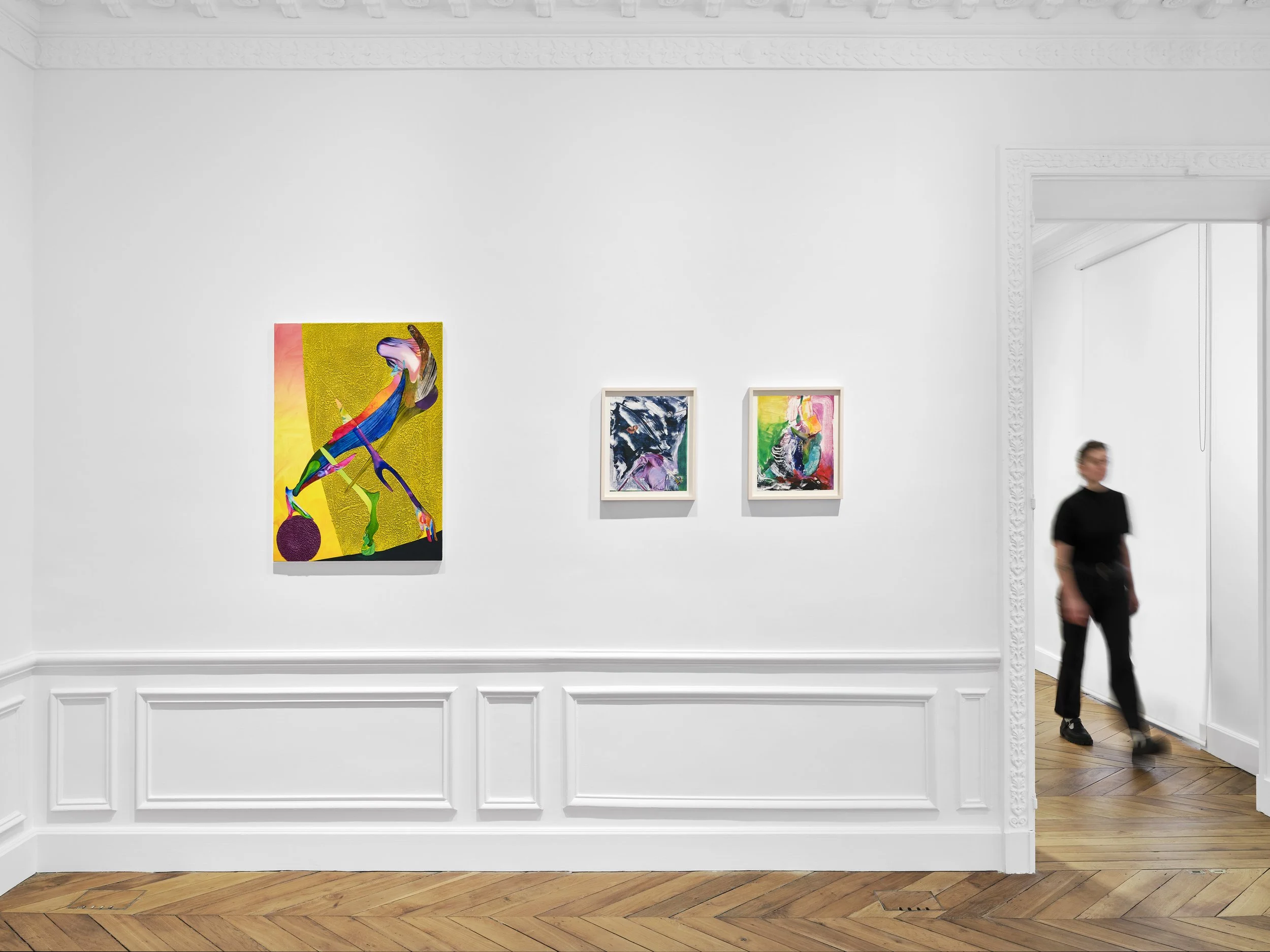
Installation Views








Featured Works
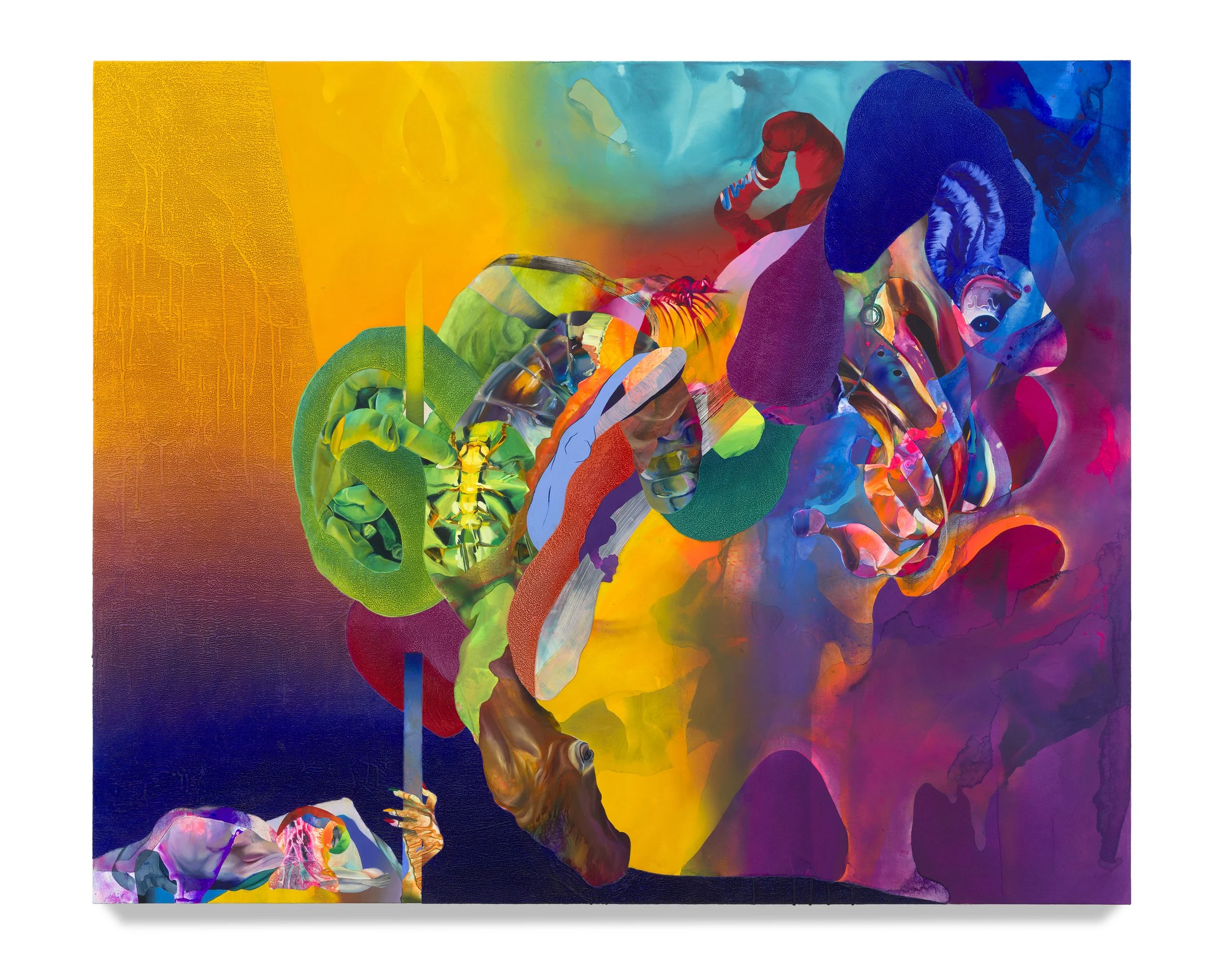
Like a Devil’s Sick of Sin, 2024, 65 x 80 in.
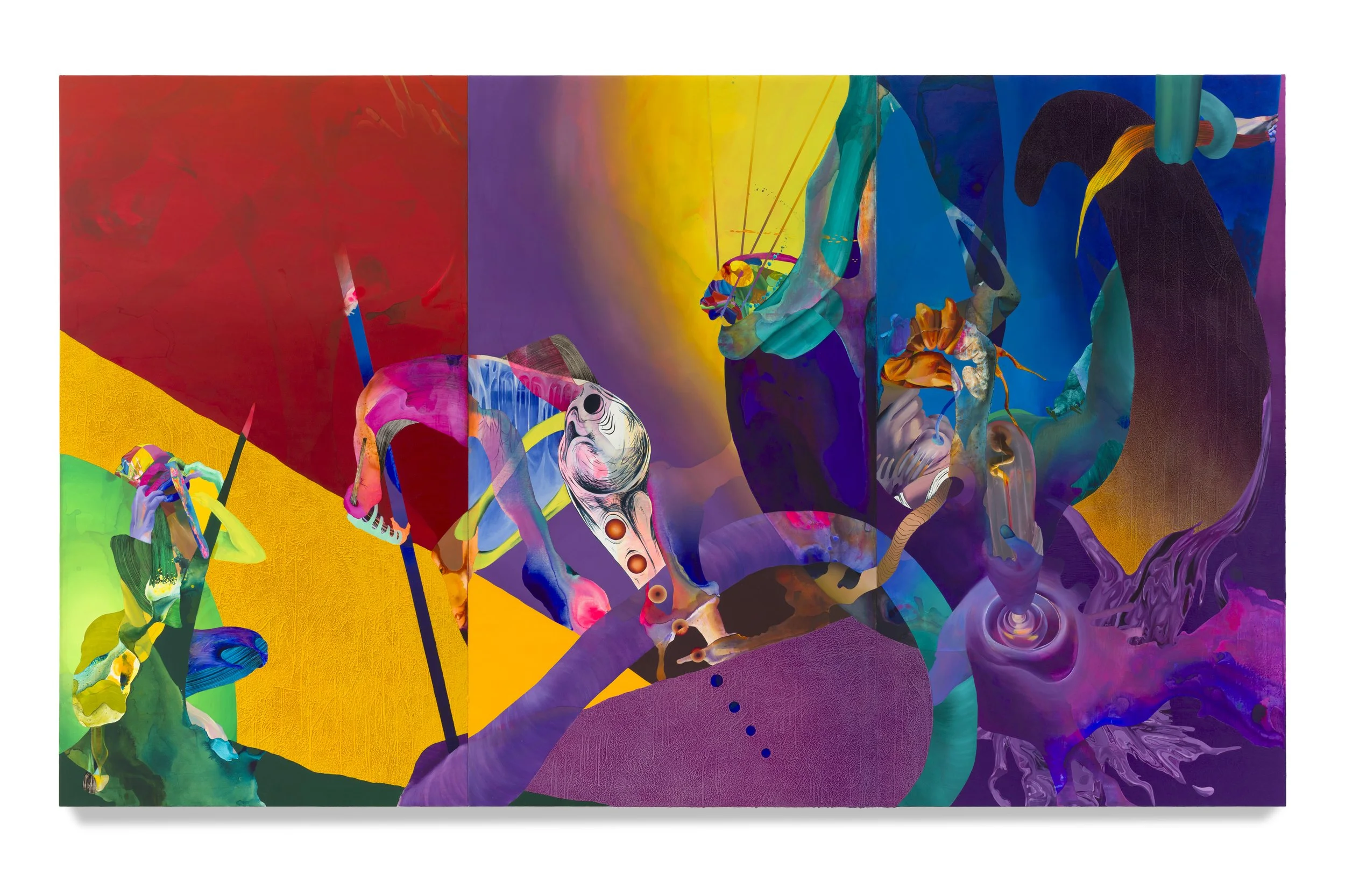
Muecas, 2024, 86 x 144 in.
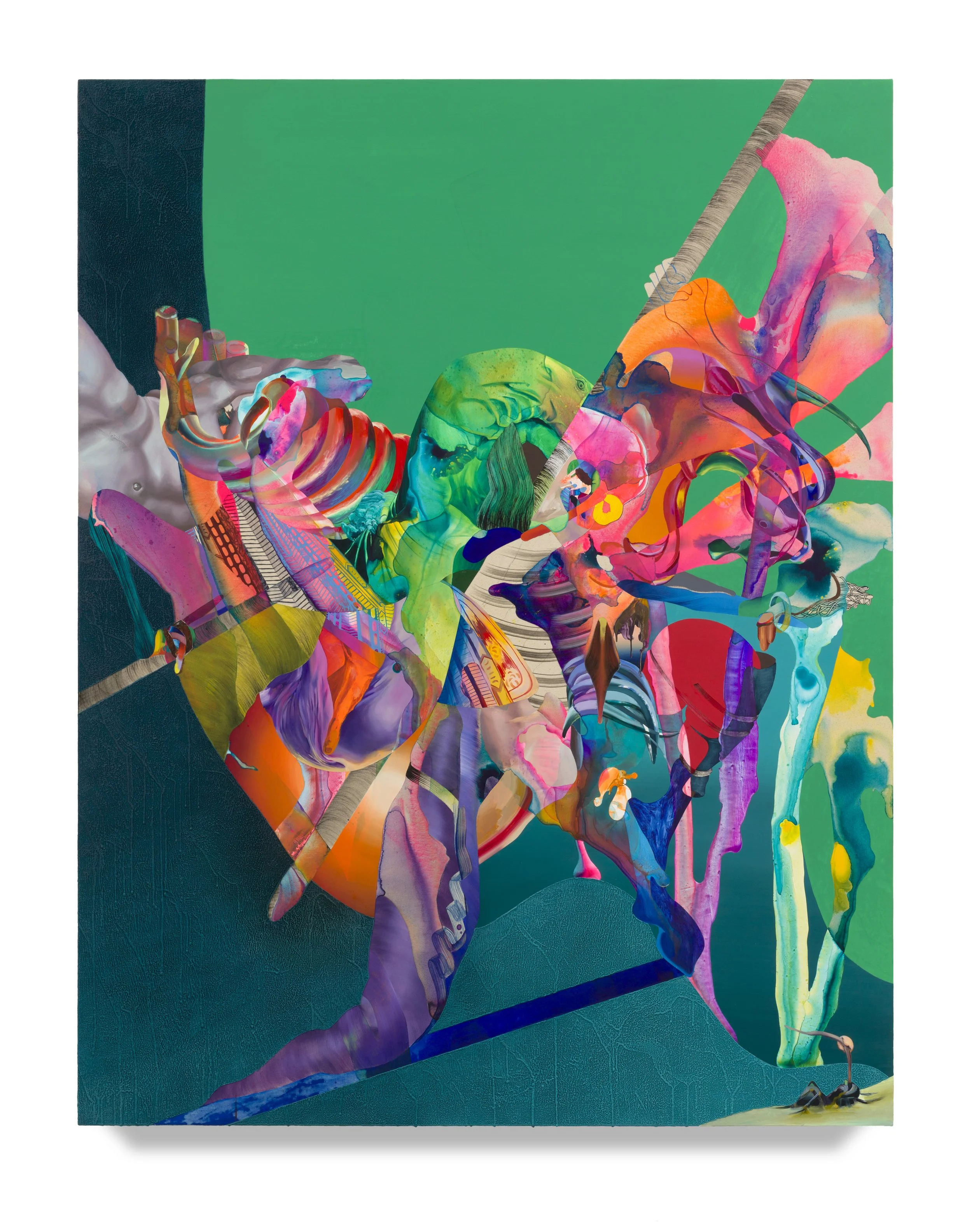
Paper Planes, 2024, 86 x 67 in.
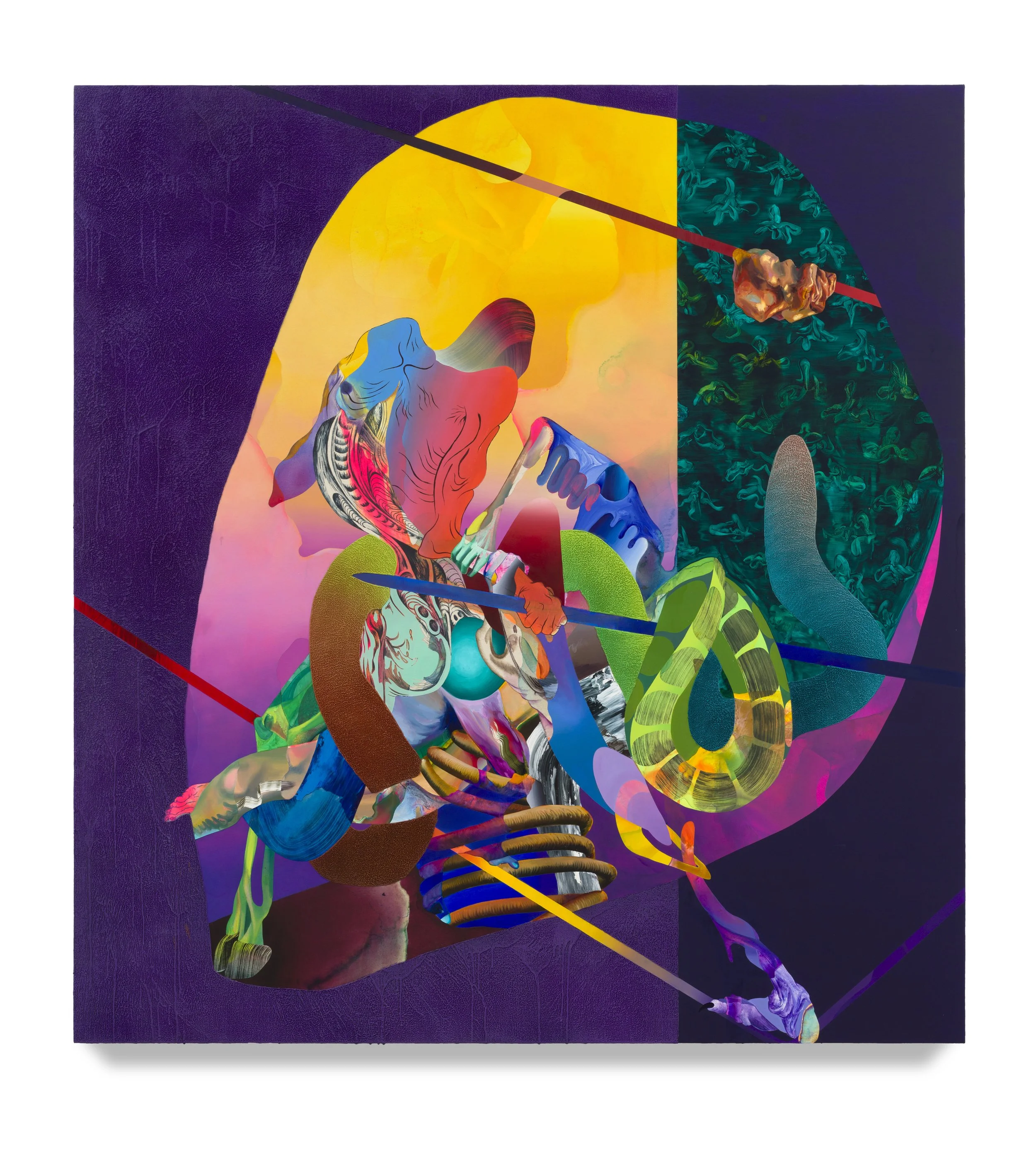
Spinal Sheds of a Desperate Glory, 2024, 86 x 80 in.
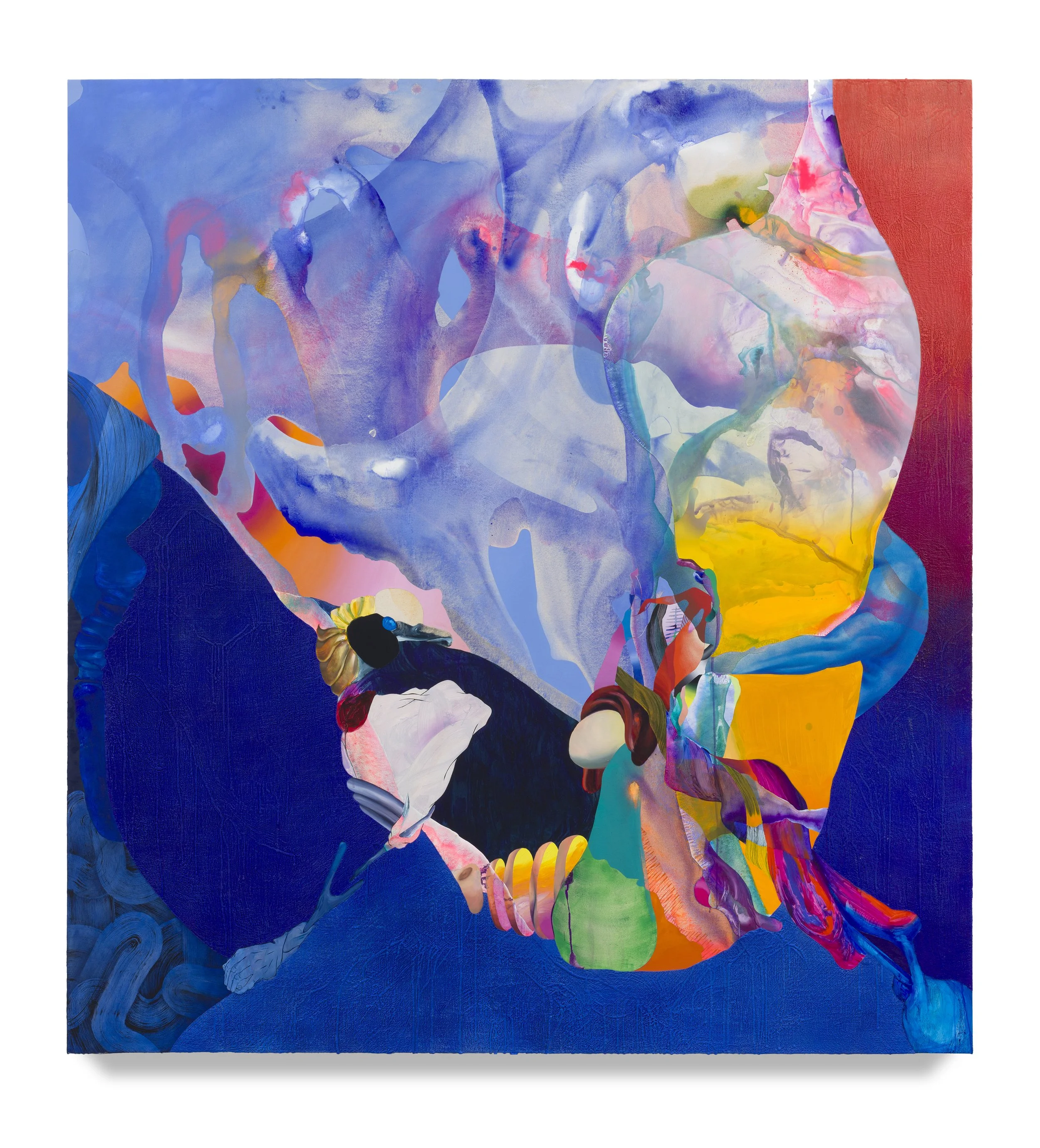
Impression of a Hole, 2024, 86 x 80 in.
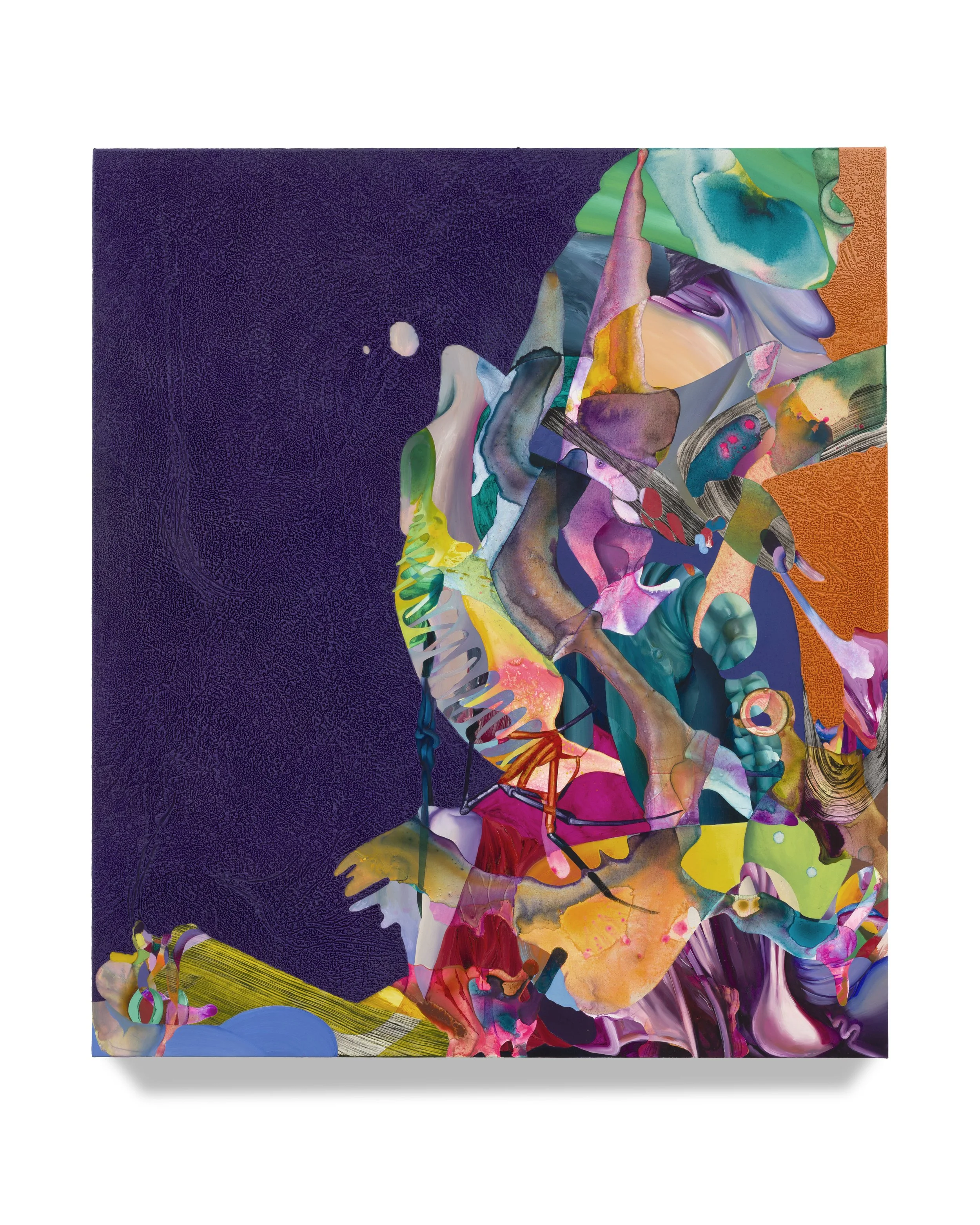
Mouthfeel, 2024, 48 x 42 in.
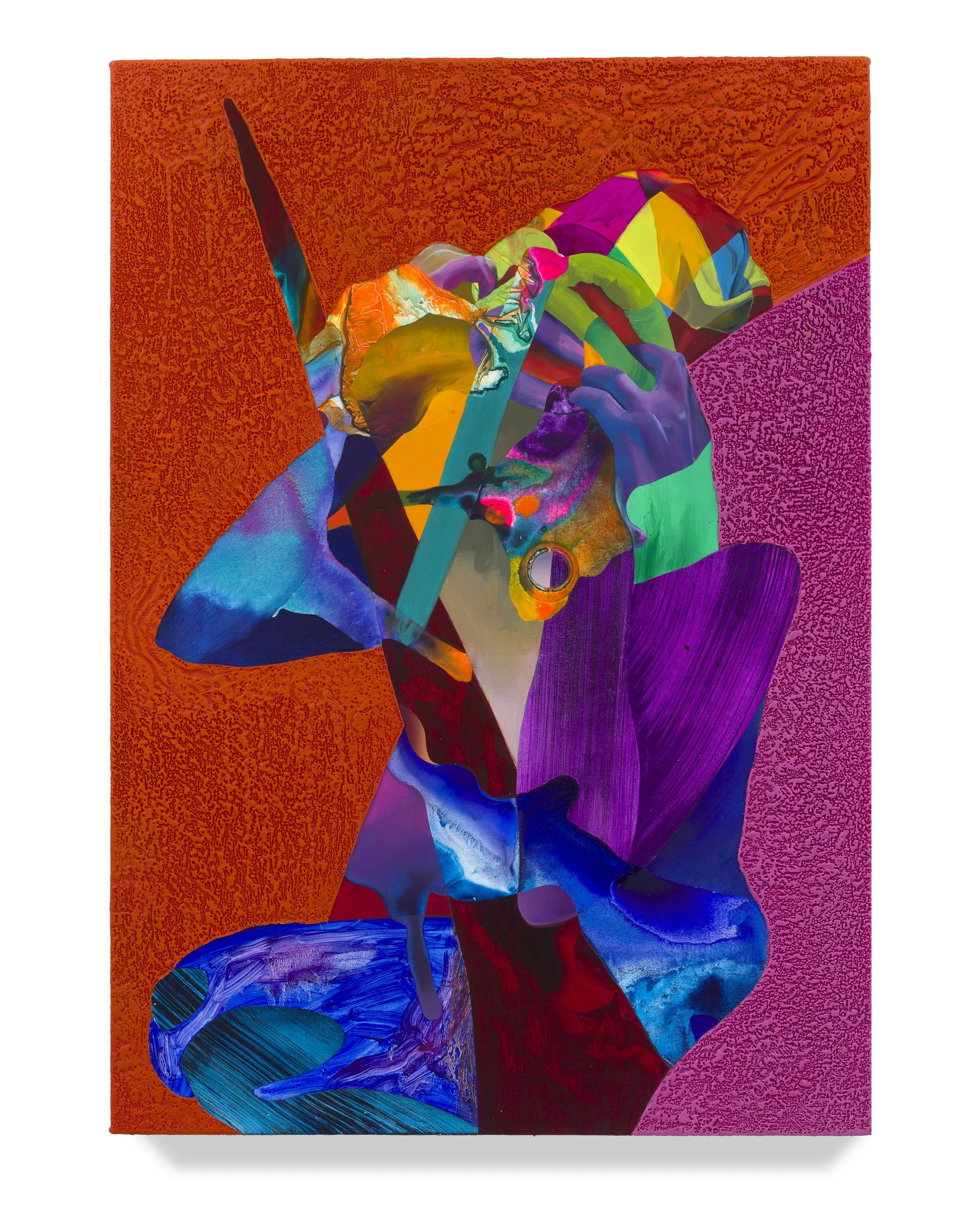
A Devine Grin, 2024, 34 x 24 in.
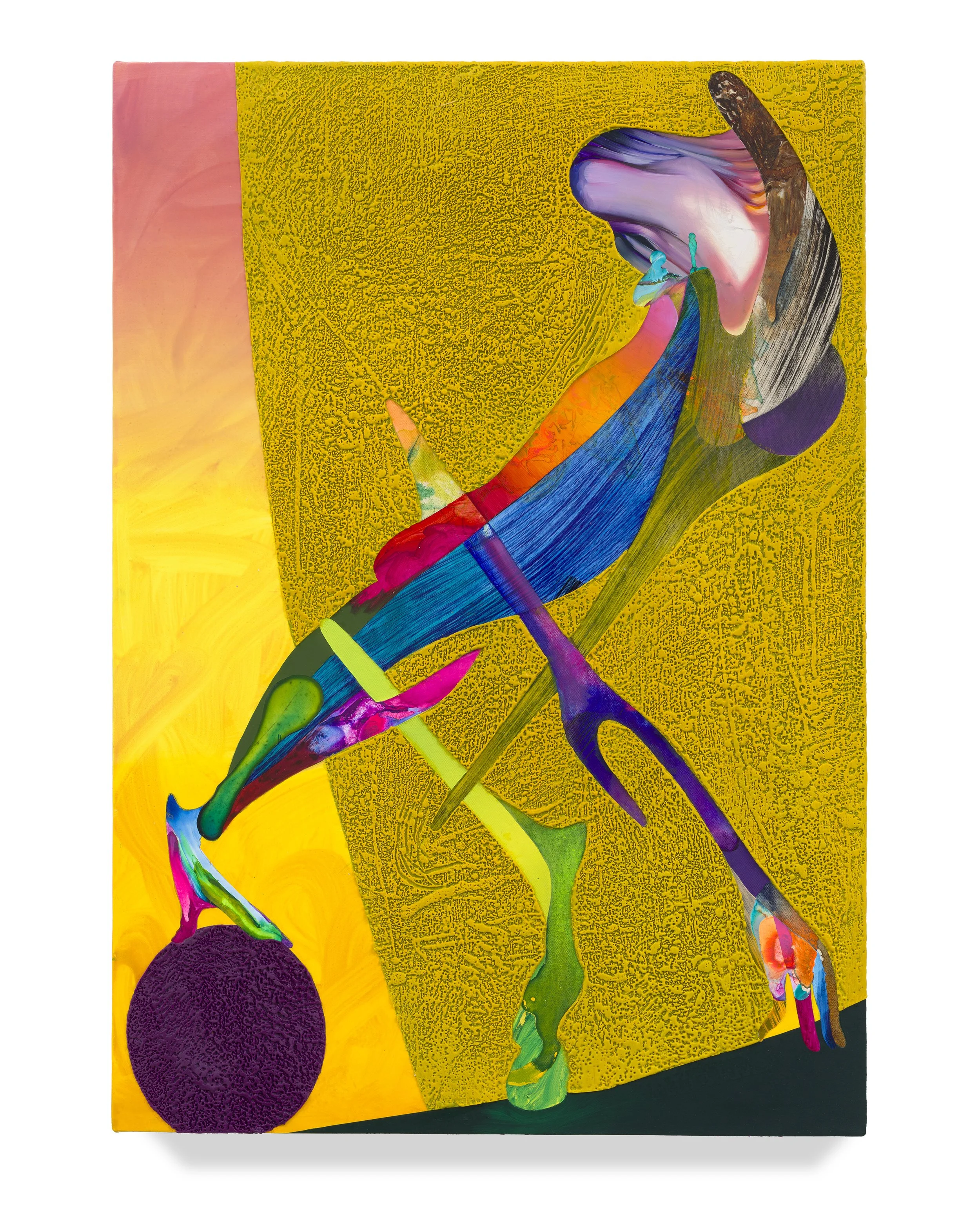
Frivolous Tendon, 2024, 34 x 24 in.
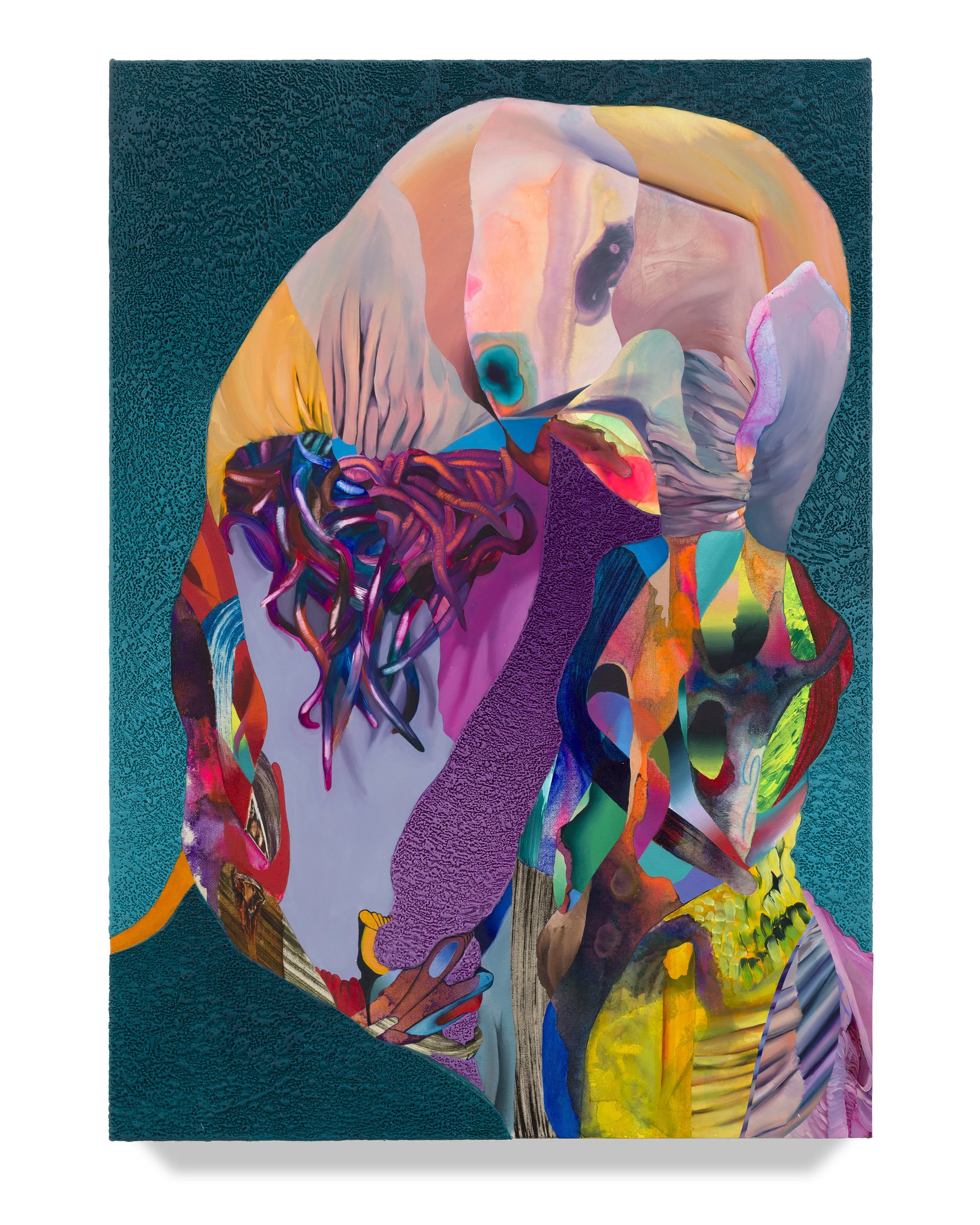
In your vast and ancient sorrow that was my home, 2024, 34 x 24 in.
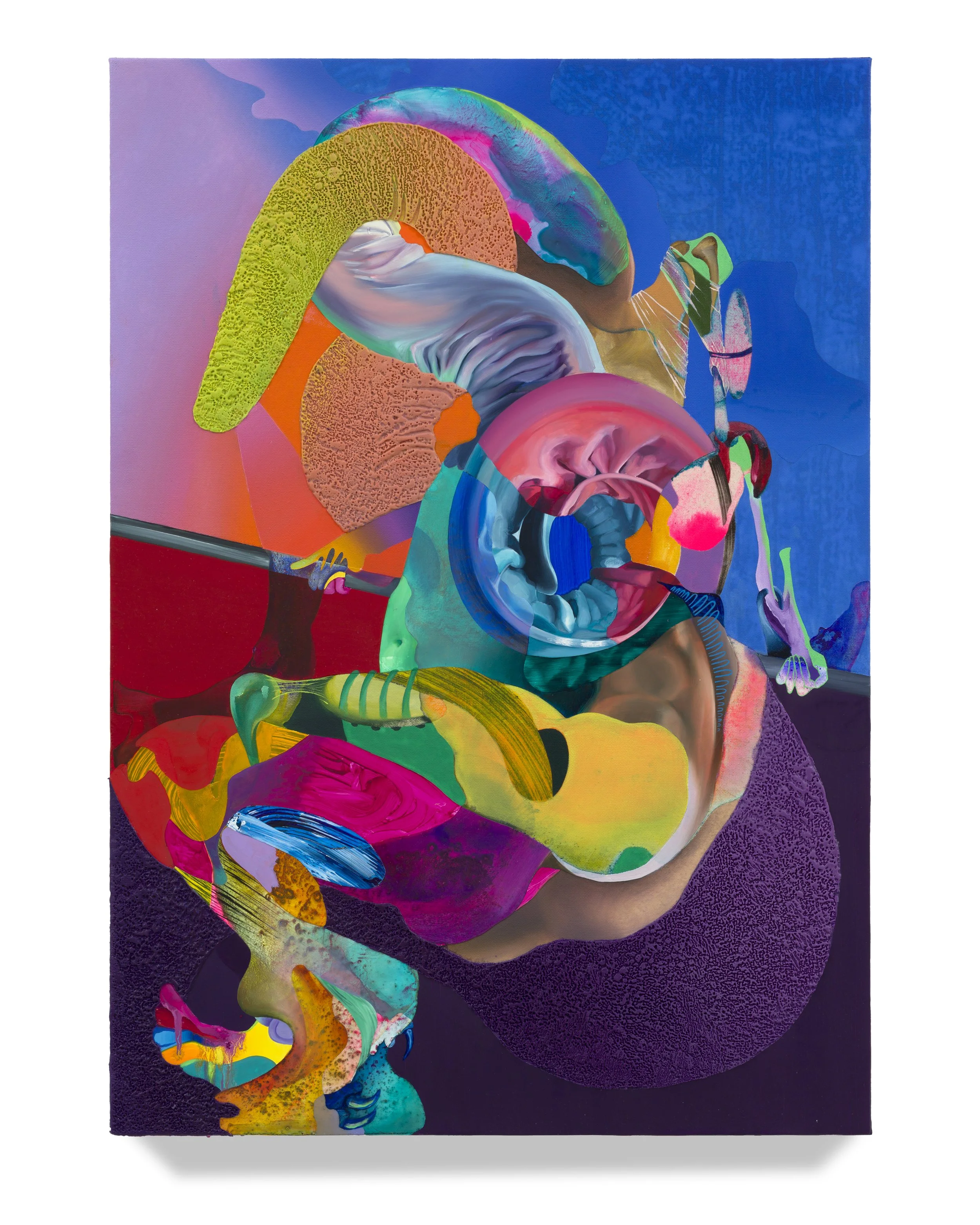
Scattered Signals of the Upright, 2024, 34 x 24 in.
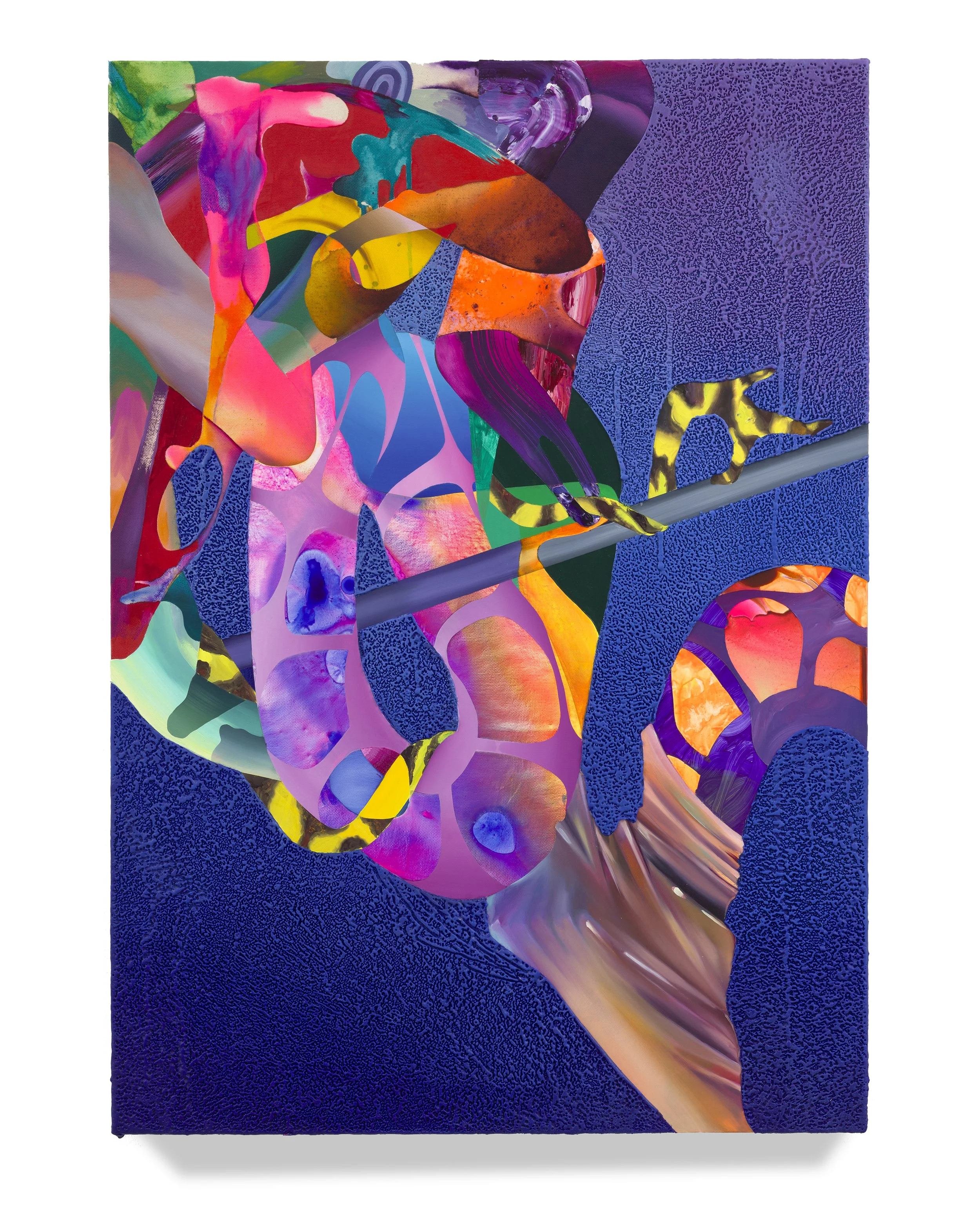
Lengua Anclada, 2024, 34 x 24 in.
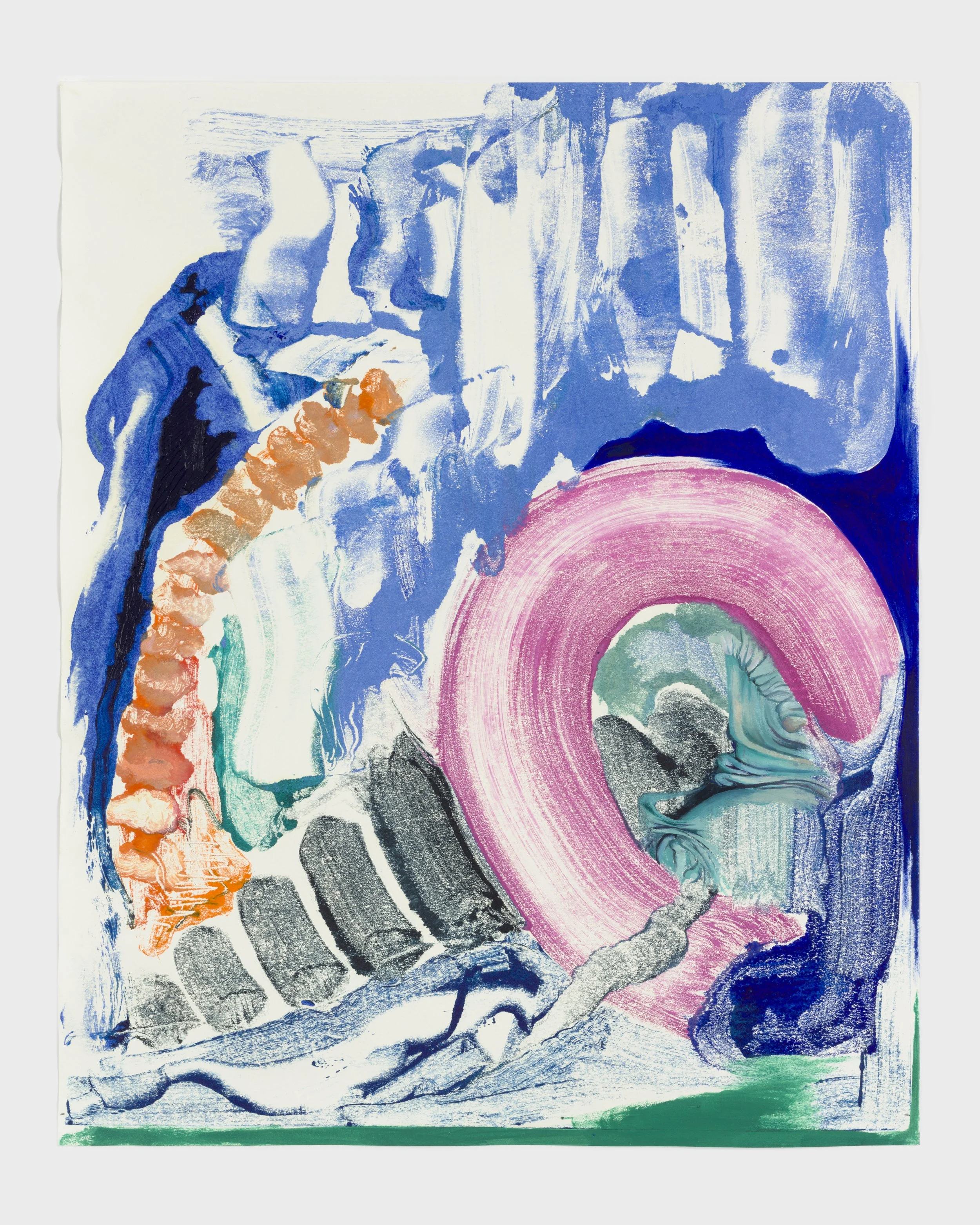
QUIMERA010, 2024
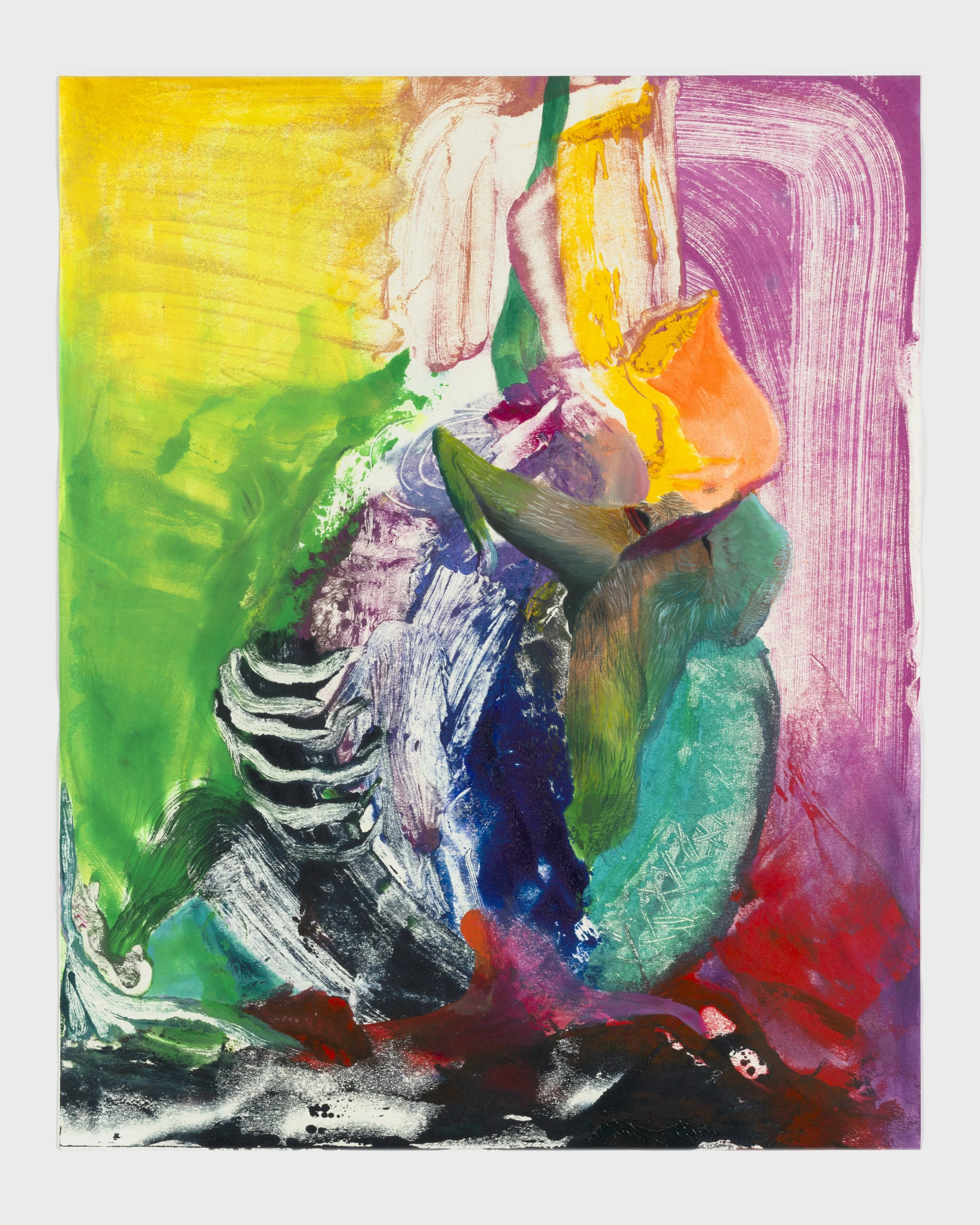
QUIMERA015, 2024
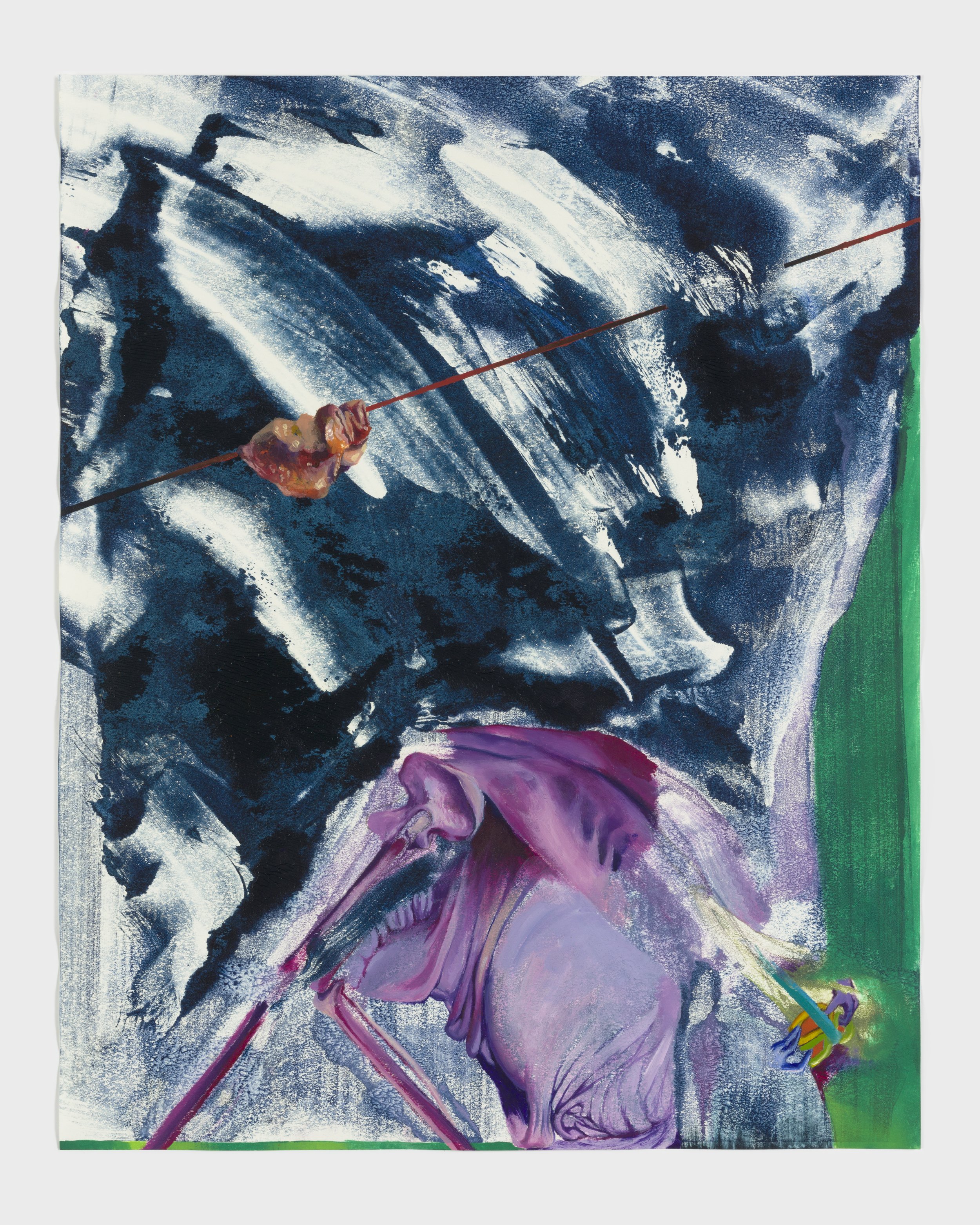
QUIMERA020, 2024
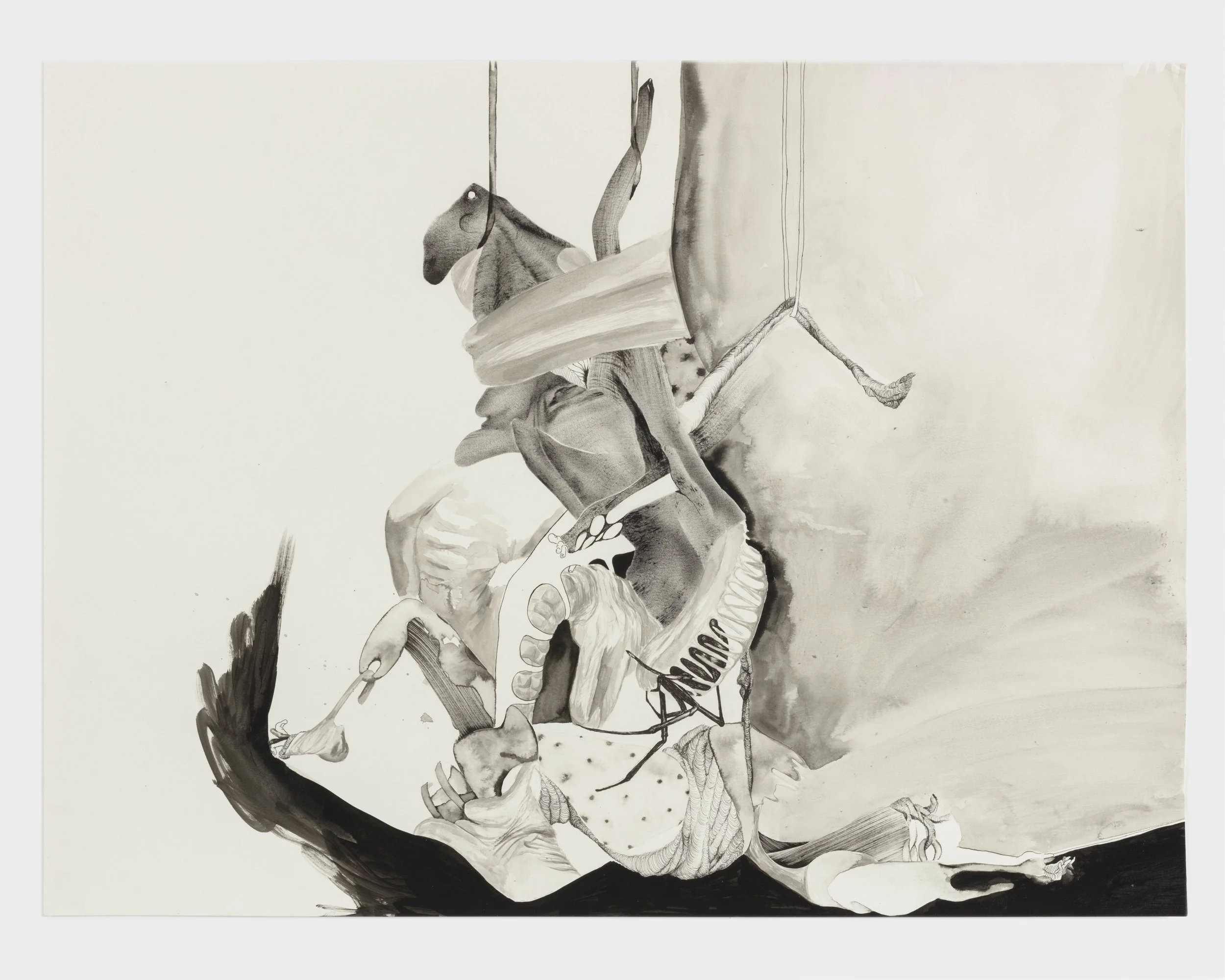
Dead Playthings, 2024
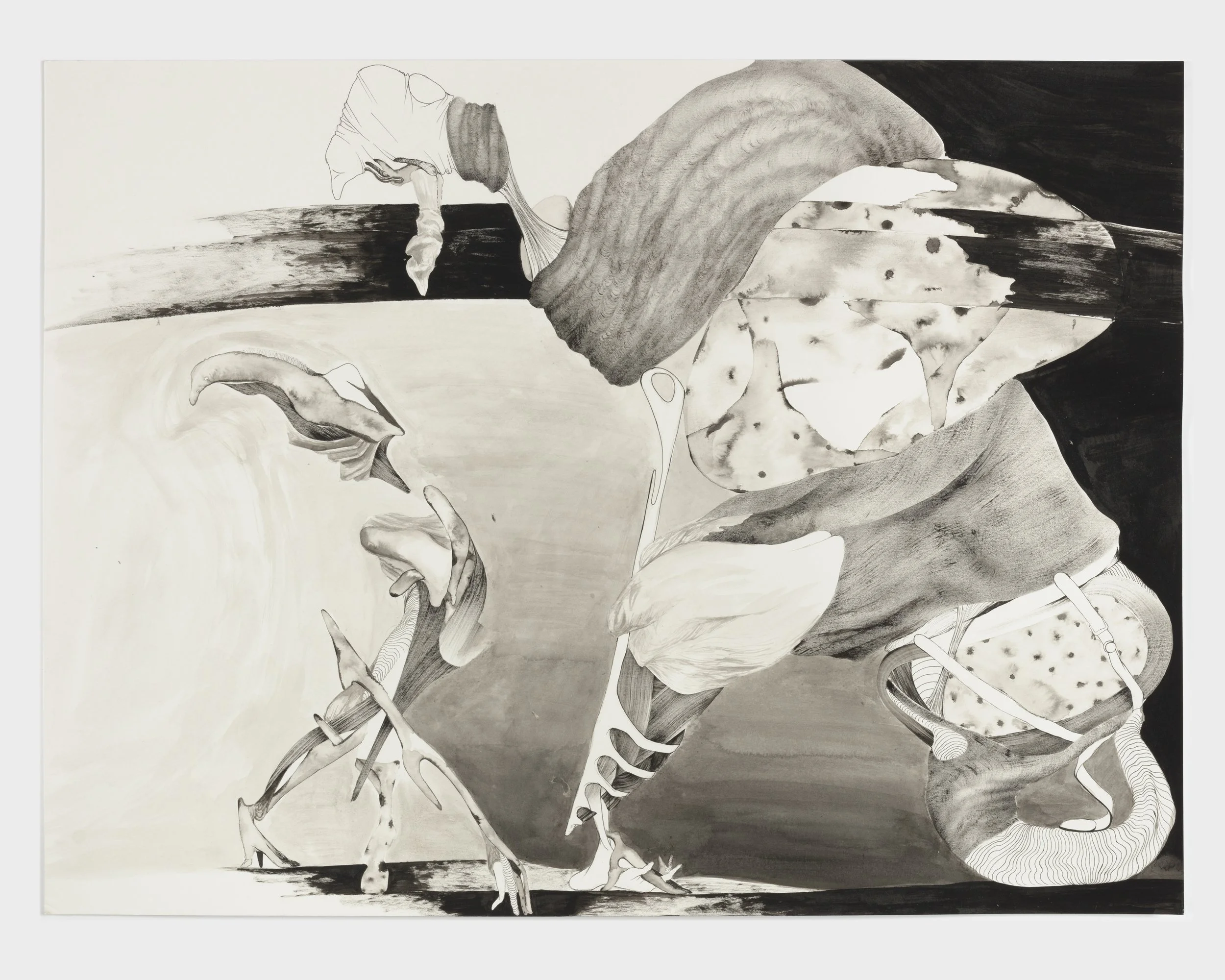
Desperate Glory, 2024
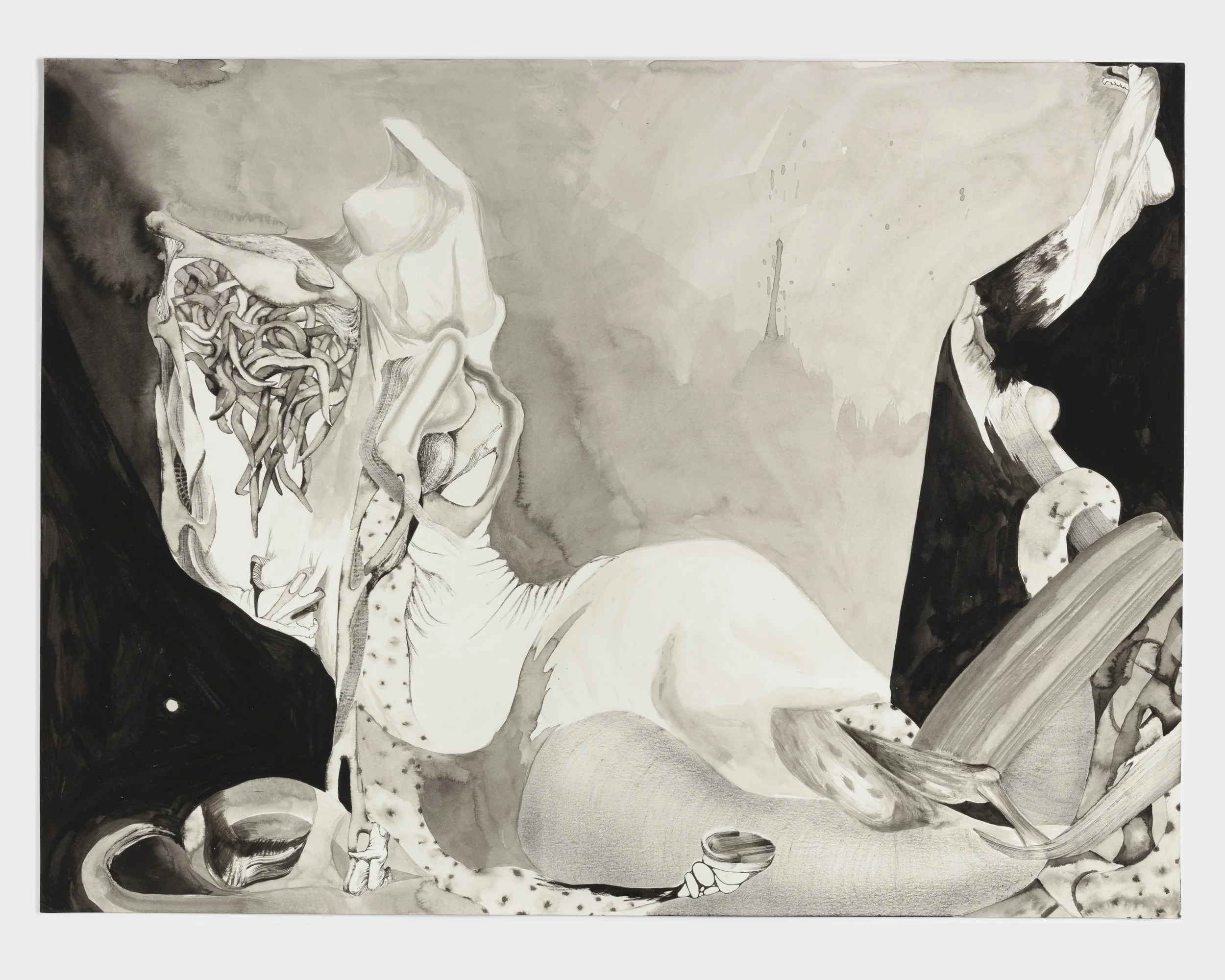
Destruction lies, the seed of birth, 2024
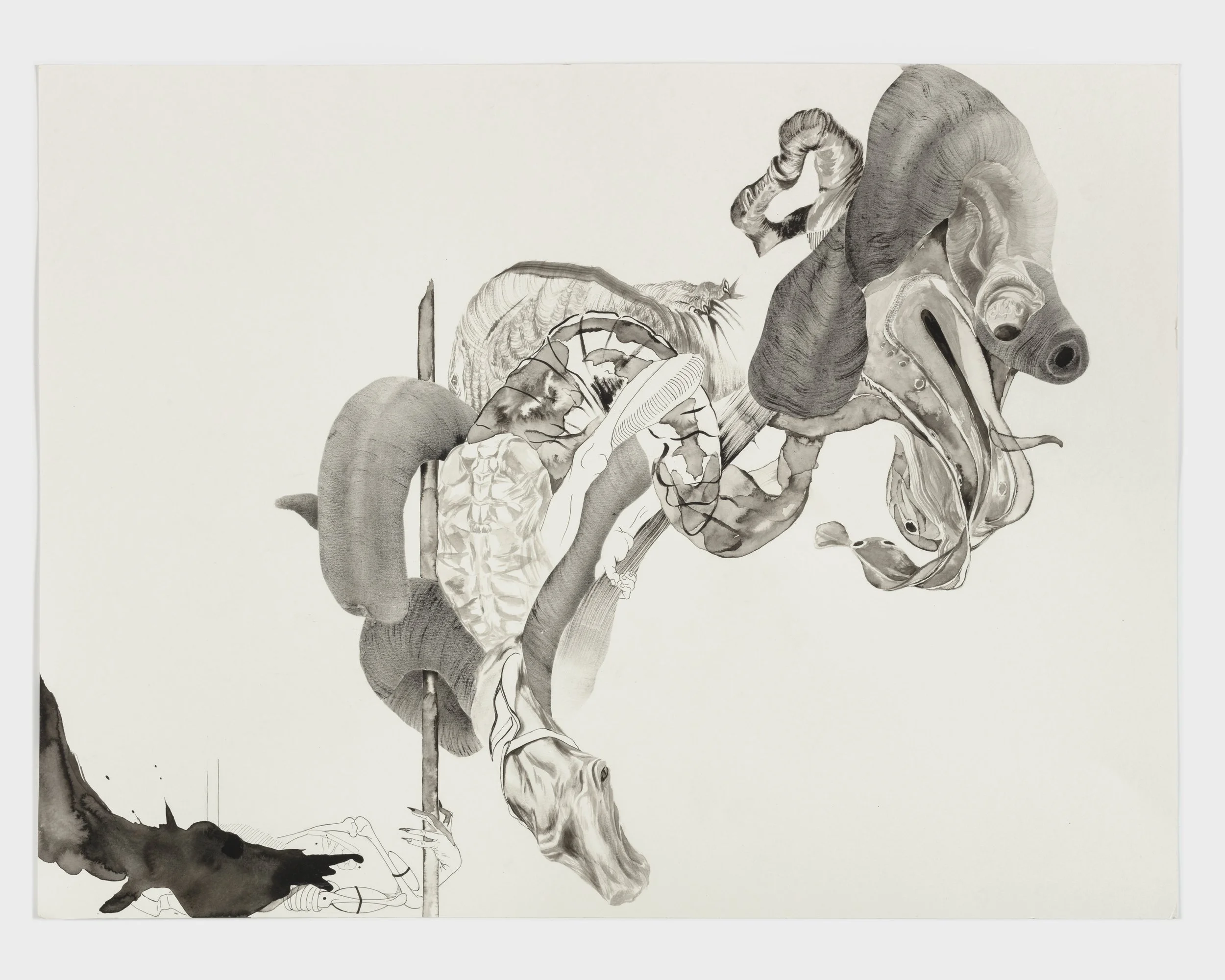
Hobby Horses, 2024
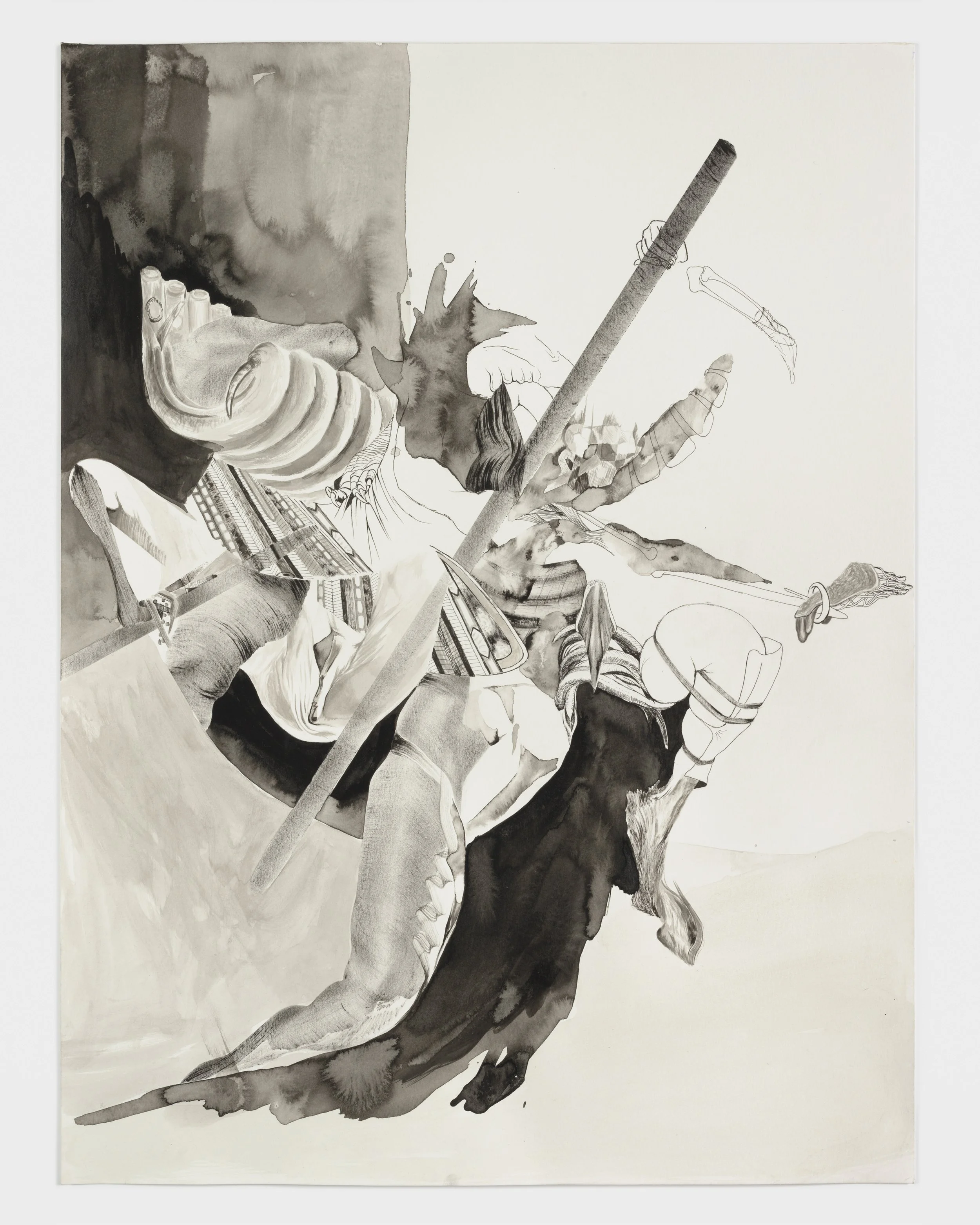
Race to Dead Matter, 2024
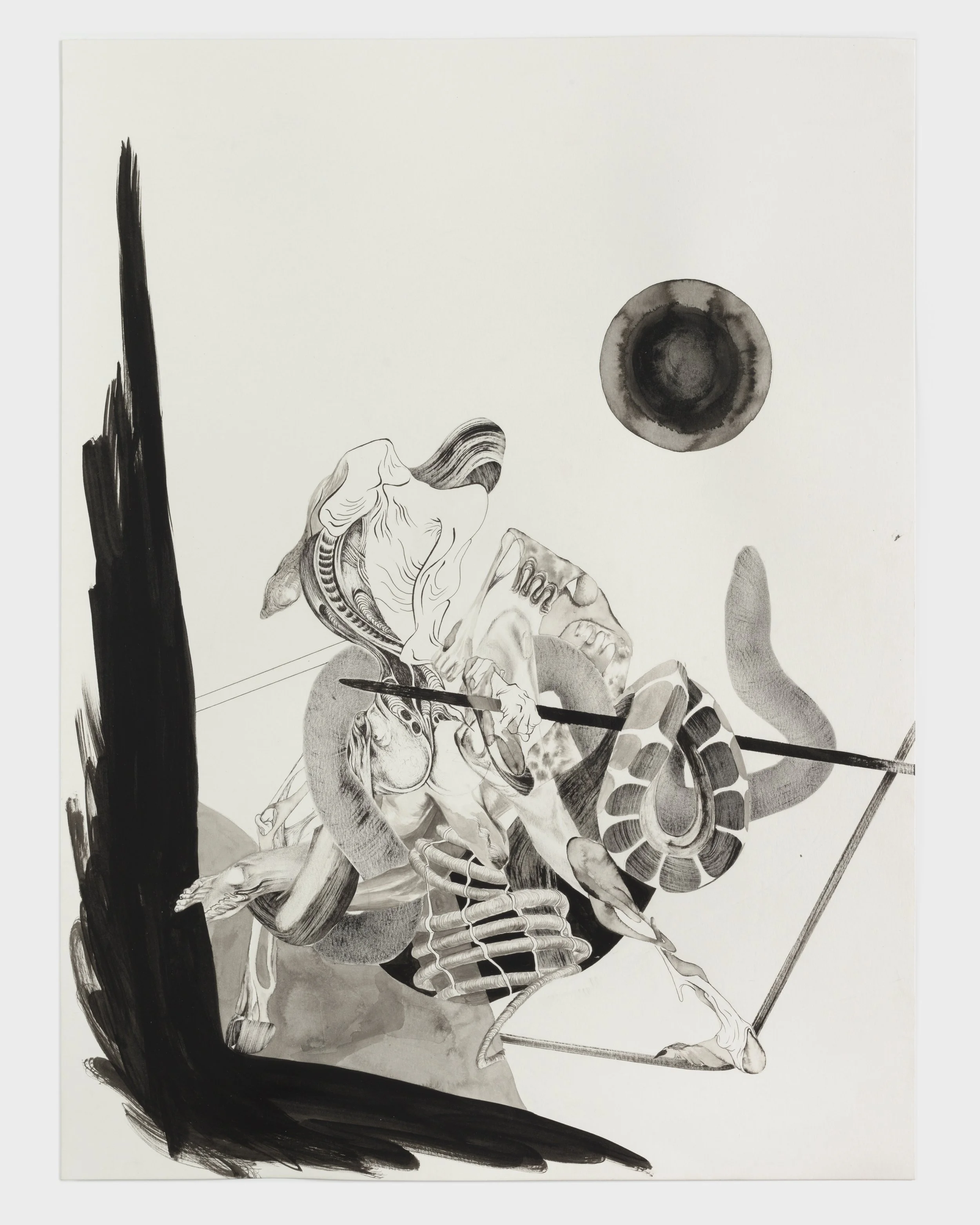
Your Kingdom Flashes, 2024
Press
Artsy, June 2024. “Ilana Savdie’s Fluorescent Paintings Conjure a Carnival Chaos”
Harper’s Bazaar France, June 2024. “Les métamorphoses d’Ilana Savdie à la galerie White Cube”
Transfuge, July 2024. “Ilana Savdie chez White Cube”
Numéro, July 2024. “La sensation de la peinture Ilana Savdie enflamme la galerie White Cube de Paris”
[1] Roland Barthes, ‘The World of Wrestling’ [1957], in Mythologies (London: Vintage, 2000), trans. Annette Lavers, p.15
[2] Susan Sontag, ‘Notes on Camp’ [1964], in Against Interpretation, and Other Essays (New York: Dell, 1966), p. 275.
[3] Barthes, ‘The World of Wrestling’, p.23
[4] See Guy Debord, The Society of the Spectacle [1967], trans Fredy Perlman (Detroit, MI: Black and Red, 1970); and Comments on The Society of the Spectacle [1988], trans. Malcolm Imrie (London: Verso, 1998)
[5] See Jean Baudrillard, The Gulf War Did Not Take Place [1991], trans. Paul Patton (Bloomington, IN: Indiana University Press, 1995)
[6] Amy Sillman, ‘AbEx and Disco Balls: In Defense of Abstract Expressionism II’ [2011], in Faux Pas. Selected Writings and Drawings of Amy Sillman, expanded edition (Paris: After 8 Books, 2022), p.130
[7] This purposefully ambiguous term was derived by Deleuze from Antonin Artaud. See Deleuze and Guattari, Anti-Oedipus: Capitalism and Schizophrenia[1972] (Minneapolis, MN: University of Minnesota Press, 1983), trans. Robert Hurley et. al., pp. 8-18; and A Thousand Plateaus [1980] (Minneapolis, MN: University of Minnesota Press, 1987), trans. Brian Massumi, pp. 149-166.
[8] Jung outlines the ‘shadow’ as a facet of the ‘collective unconscious’ composed of ‘inferiorities’ and emotions that are acquired and affect the individual ego rather than arising from it; see C. G. Jung, Aion: Researches into the Phenomenology of the Self [1951], trans. R. F. C. Hull, reprinted in Herbert Read, Michael Fordham and Gerhard Adler (eds.), and C.G. Jung: The Collected Works, Volume Nine, Part II (New Haven, CT: Princeton University Press, 1959), p.8
[9] Duchamp in fact incorporated two kinds of shadow in this work: a literal shadow, cast by the bottlebrush that protrudes from the centre of the canvas, and painted images of shadows cast by his two of his earlier readymades, Bicycle Wheel (1913) and Hat Rack (1917), as well as a corkscrew; for more on this work and Duchamp’s practice, see Rosalind Krauss, ‘Notes on the Index: Seventies Art in America’, October 3 (Spring, 1977), pp.68–81, and David Joselit, Infinite Regress: Marcel Duchamp, 1910–1941 (Cambridge, MA and London: MIT Press, 1998)
[10] As Bill Hayes relates, Kafka engaged in this exercise regularly, as noted in his diaries; Hayes, Sweat: A History of Exercise (London: Bloomsbury, 2023), p.5
[11] To cite Sillman once more: ‘The pigment itself is a reverse alchemy, a gold that becomes shit in our studios, and our task is to try to turn shit back into gold.’ Sillman, ‘On Color’ [2013–2022], in Faux Pas, p. 61
[12] See for example Peter J. Smith, Between two stools: Scatology and its representations in English literature, Chaucer to Swift (Manchester: Manchester University Press, 2015).
[13] Freud, ‘Character and Anal Eroticism’ [1908], in James Strachey, Anna Freud, Alix Strachey, and Alan Tyson (eds), The Standard Edition of the Complete Psychological Works of Sigmund Freud, Volume IX (1906-1908), Jensen’s ‘Gradiva’ and Other Works (London: Hogarth press, 1953), pp. 167-177.
[14] Sillman, ‘Shit Happens: Notes on Awkwardness’ [2015–2016], in Faux Pas, p.164